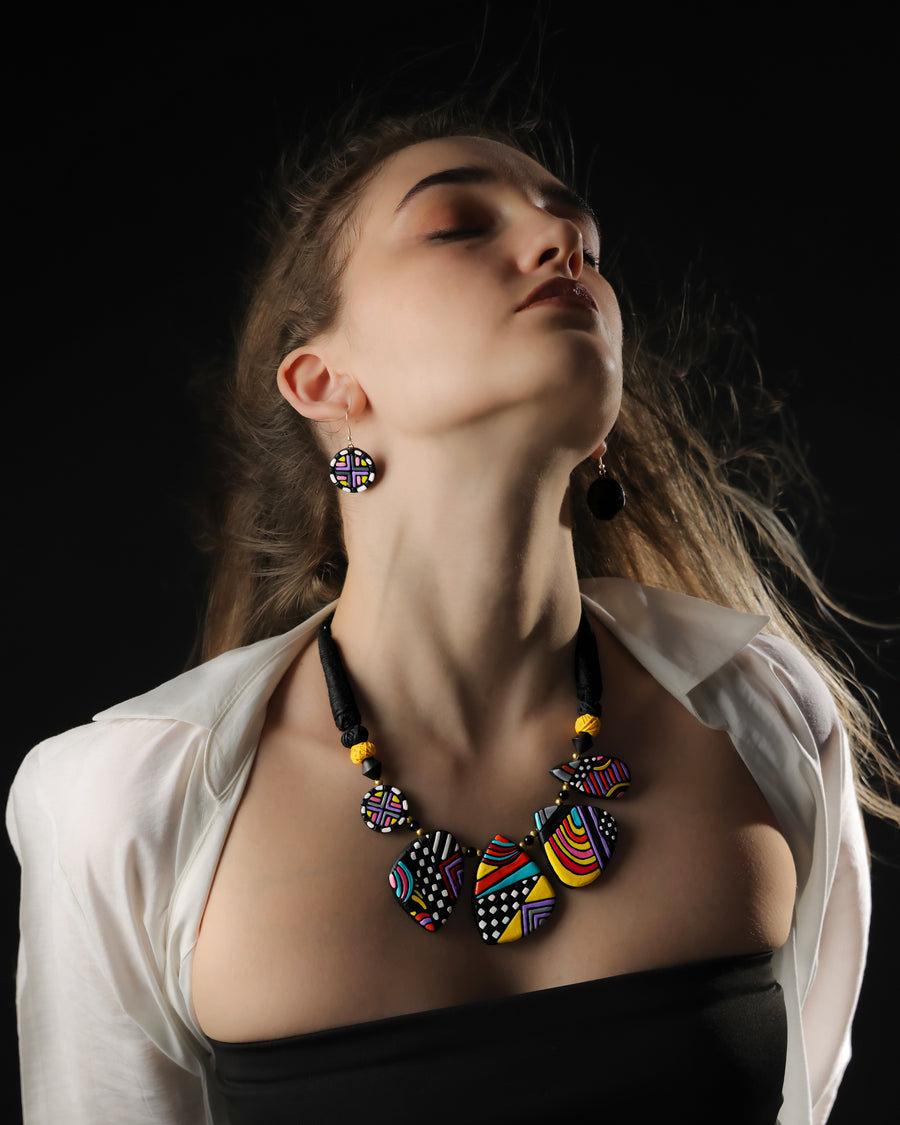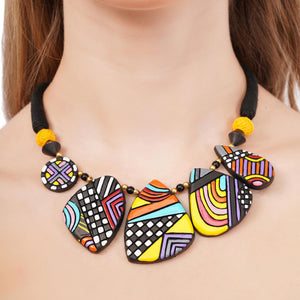
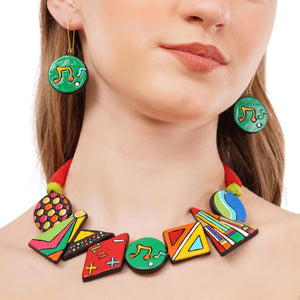


If you've at all spent time going through fashion coverage this year, you'll have observed a gradual change. The kind of jewelry people want to talk about now isn't the largest diamond in the room; it's the piece with a backstory, the earrings that look like someone actually made them, and the necklace that feels warm rather than cold to the touch. This is why clay jewelry has moved from a rare discovery in craft markets to a real style trend, and 2027 is poised to be the year it becomes properly mainstream.
We've spent the last few months watching runway notes, seeing what stylists are pulling for their clients, and yes, keeping an eye on award-season red carpets, where the mood this year has leaned noticeably toward restraint and craftsmanship over pure carat count. Below are ten jewelry trends we think you'll see everywhere this year, along with a few pieces from our own studio that already fit the mood perfectly.
1. Earthy Tones Are Replacing Cool Metals
For many years, fine jewelry consisted of polished silver or cold white gold; this year, however, warmer and more earthy shades are becoming popular, with terracotta reds, ochre yellows, and soft clay browns, colors you'd normally associate with a sun-exposed Mediterranean village rather than with jewelry displayed in a shop. It's also a truly appealing change since these shades look wonderful on almost any skin tone, which is one of the reasons why stylists keep choosing them, no matter whether the client they have is attending a gallery opening or is just running errands on a Tuesday.
What's interesting is how naturally this palette pairs with what's already happening in fashion more broadly. Autumn wardrobes have leaned warm for a couple of seasons now, all cognac leather and rust-colored knits, so jewelry finally catching up to that mood feels less like a trend and more like an overdue correction. If your closet already has a lot of warm neutrals, this is one of those rare jewelry trends that will genuinely make everything you own look a little more pulled together, rather than fighting against your existing wardrobe.
2. Texture Over Shine
This year, the pieces that have attracted the most attention do not have high-polish finishes but rather show texture, such as the fingerprints imprinted in the clay, the slight ridges left by the hand-thrown method, and a matte surface which softly reflects light rather than sending it back at you.
There's also a practical upside here that doesn't get talked about enough. Matte, textured surfaces hide the small everyday wear and tear, tiny scuffs, faint fingerprints, that would show up immediately on a high-polish metal. A textured clay piece tends to look just as good on day two hundred as it did on day one, which is a quietly nice thing to know if you're investing in pieces you actually intend to wear often rather than save for special occasions.
3. One-of-One Pieces Over Mass Production
These earthy pieces are, almost by definition, harder to mass-produce identically. Every piece carries small variations, which used to be seen as a flaw and are now considered the entire point. Shoppers are actively seeking out items where no two pieces are perfectly alike, the same instinct that's driven the vintage and secondhand boom over the last several years.
There's something quietly reassuring about knowing the piece on your ear or around your neck genuinely doesn't exist anywhere else in exactly that form. It removes the low-level anxiety of showing up somewhere and seeing three other people wearing the identical mass-produced necklace. With handmade clay pieces, that particular worry mostly disappears.
4. Jewelry Sets That Do Double Duty
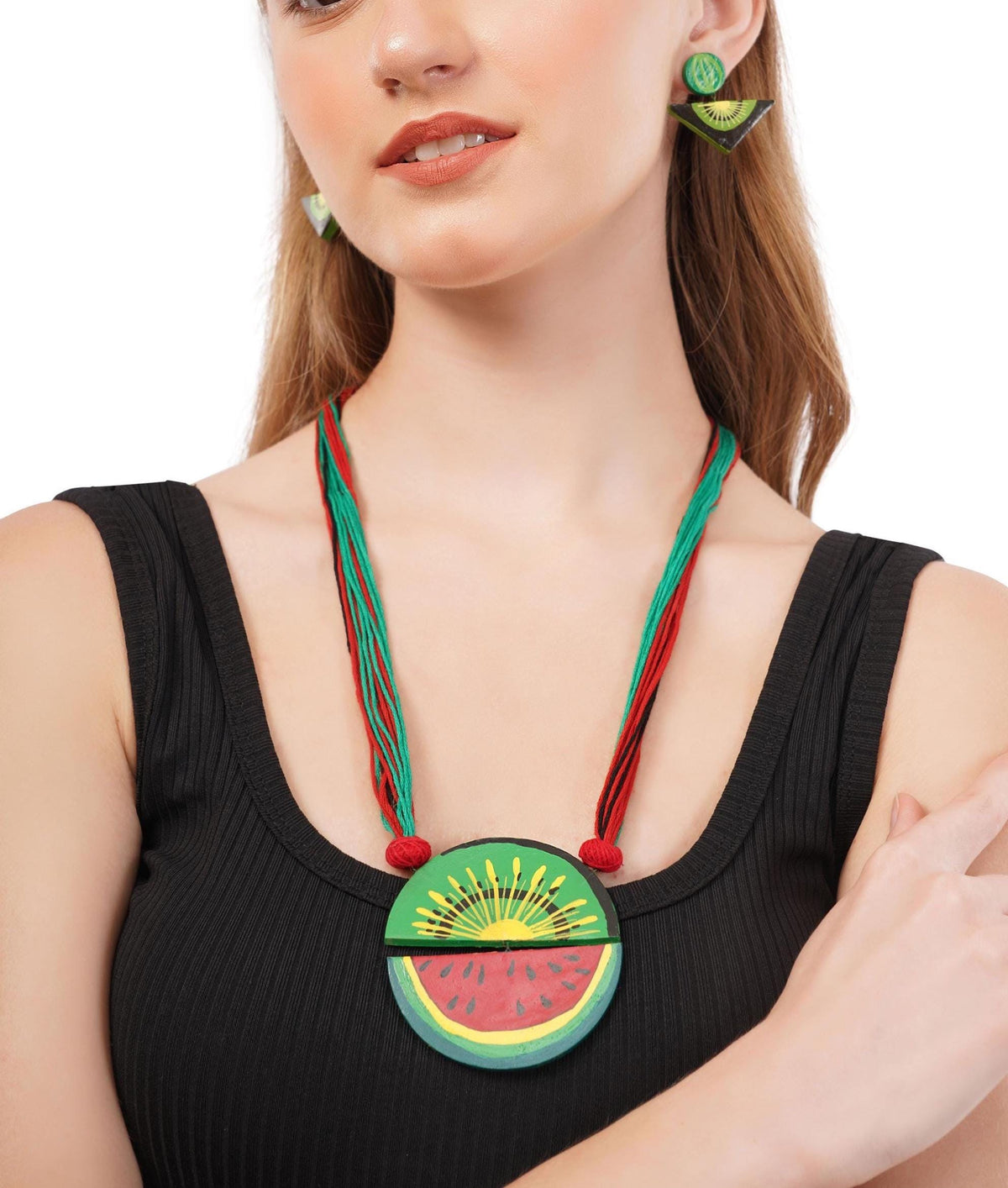
Rather than buying a necklace here and earrings there, more women are shopping for jewelry sets that are designed to be worn together, or split apart and mixed into other outfits. Our Kiwi Clay Jewelry Set is a good example: playful enough to wear as a full set for something fun and colorful, but the earrings alone work just as well dressed down with a plain white tee.
5. Minimalism, But Make It Warm
Minimalist jewelry isn't going anywhere, but it is changing. Rather than having cold geometric lines, the new minimalism features soft, rounded edges and a handmade warmth. The Petal & Slate Terracotta Heart Duo reflects this shift: it has a simple shape yet still feels personal, not sterile.
This is a genuinely good development for anyone who loves the idea of minimalism but has always found it a little cold in practice. A rounded terracotta shape carries the same restraint as a sleek metal bar necklace, just without the slightly clinical feeling that can come with too much polish. It's minimalism that still feels made by a person, for a person.
6. Provenance as a Selling Point
People are now asking questions such as where their jewelry comes from, who made it, and what the working conditions were. This type of item benefits from being produced in small quantities, is often made by hand, and uses a method with relatively low environmental impact compared with mining and metal refining. Brands that offer a high degree of transparency about their processes are gaining consumer trust, and that trust is showing up in repeat purchases rather than one-off buys.
It's no longer merely an ethical option; it has become a real factor in purchasing decisions. Nowadays,, more women are asking the same questions of their jewelry that they once asked of their food and skincare: what is actually in it, and how is it made? Clay jewelry tends to stand up to that kind of scrutiny.
7. Mixing Fine Details With Casual Clothing
One of the most freeing trends this year is wearing genuinely well-made, artisanal jewelry with completely casual outfits- think a hand-thrown pendant with a hoodie, or ceramic studs with sweatpants. The old rule that "nice" jewelry required "nice" clothes has quietly dissolved.
Part of what's driving this is simply comfort culture sticking around long after loungewear had its big moment. People got used to dressing for themselves rather than for an occasion, and jewelry is following the same logic. A beautifully made piece doesn't need a beautifully dressed outfit to earn its place; it just needs you to want to wear it that day.
8. Color Stories That Mirror Nature
Clay jewelry naturally suits landscape-inspired color schemes like rust, sage, sand, and dusty rose; instead of matching the metal to an outfit, more women match their mood and choose a color scheme for the week, just as they would choose a scent.
This approach also solves a real practical problem many women run into: the exhausting task of matching gold jewelry to gold-toned clothes and silver to silver-toned clothes every single day. Color-led jewelry sidesteps that entirely. A rust-toned pendant works with cream, black, denim, and deep green alike, because it's being chosen for its color story, not its metal finish.
9. Slower Shopping Habits
Right now, a wider cultural attitude is evident even on the red carpet: restraint and confidence seem more aspirational than lots of sparkle or extravagance; people are favoring fewer, higher-quality items and buying with purpose rather than making constant purchases. Sustainable jewelry fits this more thoughtful, slower approach to shopping.
If you've felt a bit worn out by fast-fashion jewelry that tarnishes within a season and gets tossed, this slower approach can feel like a genuine relief. Buying one well-made piece a few times a year, rather than a drawer full of things you'll barely remember purchasing, tends to leave people far happier with their jewelry box in the long run.
10. Jewelry as a Form of Self-Expression, Not Just Status
Perhaps the most significant change is that people are now selecting jewelry based on what it reveals about their taste and values rather than simply how much it costs; a pendant shaped like a hand tells a different story from one with a logo, and in 2026 this is precisely the kind of story that people want to tell.
This is really the thread connecting every single trend on this list. Whether it's the warm color palette, the visible texture, or the one-of-one nature of each piece, the underlying appeal of this category is that it lets your accessories say something specific about you, rather than simply signaling that you can afford a particular logo.
Why This Matters If You're Building a Jewelry Collection
This doesn't mean fine jewelry is being abandoned, but it does mean the category has now secured a permanent place at the table. When preparing a collection for the years to come, not just the upcoming season, it's a safe and stylish choice to choose pieces with texture, warmth, and a real handmade background. If you'd like to add versatile, mix-and-match pieces rather than individual statement items, our complete Earthen Clay Jewelry Sets collection is a great place to start.
We've written more about why this category has such staying power in our piece on why sustainable jewelry never goes out of style, if you want a deeper look at the reasoning behind the trend rather than just the styling. It's a useful companion read if you're the type of shopper who likes to understand the "why" behind a trend before committing your closet, and your budget, to it.
How to Start Wearing the Trend Today
You don't need to completely renew your entire jewelry box to incorporate handmade clay pieces. Instead, start small by swapping one pair of ordinary studs for a handmade terracotta pair, or add one warm-toned pendant to your collection. You'll notice that it lies against your skin quite differently from polished metal; softer, warmer, and a bit more forgiving in photographs. From there,
A good guideline is to replace rather than to add. Instead of purchasing additional jewelry on top of what you already have, have a few pieces made from sustainable clay to replace items in your collection that you pick up on autopilot rather than because you genuinely love them. That way, your jewelry box becomes more meaningful without necessarily getting bigger, which is the main purpose of making this change in the first place.
A Note on Caring for These Pieces
One question we hear often is how to keep these handmade pieces looking their best over time. The short answer is that it asks for a little more gentleness than metal, but nothing complicated. Avoid soaking pieces in water, keep them away from perfume and lotion where possible, and store them somewhere they won't knock against harder jewelry. Treated with that basic care, a well-made piece will comfortably become one of those items you reach for automatically, years down the line.
Frequently Asked Questions
Is clay jewelry actually durable enough for everyday wear?
Yes, when it's properly fired and sealed. Quality terracotta earrings and clay pieces are kiln-fired at high temperatures, which makes them surprisingly sturdy for daily wear. Treat them like delicate jewelry: avoid heavy impact, and store pieces separately so they don't knock against harder metals.
How is clay jewelry more sustainable than traditional fine jewelry?
Clay is an abundant, low-impact material compared to mined metals and gemstones, and most clay jewelry is produced in small batches by hand rather than through energy-intensive industrial processes. It's also often made to order or in small runs, which reduces overproduction.
Can I wear clay jewelry with formal or dressier outfits?
Absolutely. A well-chosen clay jewelry piece, especially in a richer tone or with a sleeker silhouette, can look just as intentional at a dinner or event as it does with everyday clothes. It's really about picking the right piece for the occasion, the same way you would with any other jewelry.
What's the easiest way to start collecting sustainable clay jewelry?
Start with one versatile set rather than lots of small individual pieces. A jewelry set gives you a necklace and earrings that already coordinate, so you can build outward from there as your taste develops, rather than trying to match pieces after the fact.