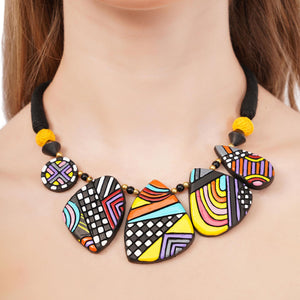


If you have been shopping for clay earrings, you have probably noticed two words that look almost the same: clay and polymer clay. They show up side by side in search results, and the photos can look similar at first glance. But clay earrings made from natural earthen clay and polymer clay earrings are two very different things, from what they are made of to how they feel on your ears and how long they last. Here is a plain, honest guide to the difference so you know exactly what you are buying.
What are clay earrings made of?
"Clay" is a broad word, so it helps to split it into two families.
Natural earthen clay (terracotta)
Natural clay is dug from the earth. Terracotta is one of the oldest forms of it, and the name means "baked earth" in Italian. Artisans shape the soft clay by hand, let it dry, and then bake it with heat so it hardens permanently. After baking, many pieces are hand-painted. That is how our jewelry at Cordelia Kraft is made: artisans in India shape, bake and paint each piece by hand, so no two pairs are exactly alike.
Polymer clay
Polymer clay is a modeling clay made from PVC (a type of plastic) mixed with plasticizers and pigment. It stays soft until it is cured in an ordinary home oven at a fairly low temperature. Because it is easy to work with and comes in every color, it is popular with hobby makers and small studios. Polymer clay is a real craft material with its own fans, but it is not earth clay. It is a plastic-based compound.
Clay vs polymer clay earrings: the key differences
Both can be handmade, colorful and fun. The differences are in the material and the making.
1. Material
Earthen clay earrings start as natural clay from the ground. Polymer clay earrings start as a manufactured PVC-based block. If you prefer natural materials, this is usually the deciding point.
2. How they are hardened
Terracotta is baked, which changes the clay into a hard, ceramic-like material. Polymer clay is cured in a home oven, which sets the plastic. Both end up solid, but they are not the same process or the same result.
3. Look and texture
Baked clay has a warm, slightly matte, earthy surface, and hand-painting sits on top of that texture. You will often see small variations in brushwork and color depth, which are part of the charm. Polymer clay can be very smooth and uniform, and it is often colored all the way through, which is how makers create marbled and "cane" patterns.
4. Weight and comfort
Both kinds can be light. Well-made clay earrings are surprisingly easy to wear, even in statement sizes. Our Indigo Bloom Dangle Earrings, for example, are listed at 1.5 inches long and 15 grams, with brass hooks. If weight is your biggest worry, we wrote a whole post on why clay makes some of the lightest statement earrings.
5. Care
Terracotta is porous, so it should be kept dry. Take clay earrings off before showering or swimming, put them on after perfume, lotion and hairspray, and wipe them with a soft, dry cloth. Polymer clay is more water-resistant but can scratch, and thin pieces can bend or snap. Either way, storing each pair separately in a pouch keeps them looking their best.
6. Story and craft
Working with natural clay, baking it and painting it by hand is a slow, skilled tradition. When you buy hand-painted terracotta jewelry, you are wearing a piece of that craft, not just a trend.
How to tell which kind you are looking at
Product photos do not always make it obvious, so check the listing details:
- Read the material line. Look for words like "earthen clay," "terracotta" or "natural clay" versus "polymer clay." If a listing only says "clay," ask the seller.
- Look at the surface. Baked, hand-painted clay usually shows brush marks and small variations. Polymer clay often looks perfectly smooth or has color running through the piece.
- Check the care notes. Advice like "keep away from water" is a strong hint that the piece is natural, porous clay.
- Check the fittings. Good fittings matter on any earring. Many of our pairs use brass hooks or brass posts.
Which should you choose?
There is no wrong answer, but here is a simple way to decide:
- Choose earthen clay earrings if you love natural materials, a warm handmade texture, and pieces painted by artisans.
- Choose polymer clay earrings if you want marbled color effects or very thin, flat shapes and you do not mind a plastic-based material.
If you are leaning toward natural clay, here are a few pairs to start with:
- Zig-Zag Oval Drop Earrings: a hand-painted multi-colored chevron pattern on earthen clay, with gold-finished brass ear wires and a white accent bead.
- Earthen Clay Lips Stud Earrings: tiny hand-shaped studs with brass post backings that sit flat against the ear.
- Cottagecore Art Dangle Earrings: soft purple, hand-painted details on lightweight earthen clay.
- Indigo Bloom Dangle Earrings: crisp white botanical motifs on a deep indigo background.
Want the full look? Many of our designs come as a matching necklace and earrings set, like the Sun & Moon Terracotta Clay Jewelry Set, which pairs an adjustable necklace with matching earrings. You can also browse every pair of handmade clay earrings in one place.
Why we work with natural clay
At Cordelia Kraft, every piece is shaped, baked and hand-painted by artisans in India. We love natural clay because it carries the maker's hand in a way you can see: the small differences in a brushstroke, the warmth of the baked surface, the feeling that someone made this for you. It also means each pair is one of a kind.
Every order ships free and insured within the U.S., includes a free surprise gift, and comes with 30-day returns, so you can try clay earrings with confidence.
FAQ
Are clay earrings and polymer clay earrings the same thing?
No. Clay earrings in the traditional sense are made from natural earth clay, like terracotta, which is baked to harden. Polymer clay earrings are made from a PVC-based modeling clay that is cured in a home oven.
Are terracotta clay earrings waterproof?
No. Terracotta is porous, so keep it dry. Remove your earrings before showering, swimming or washing your face, and clean them with a soft, dry cloth.
Are clay earrings heavy?
Usually not. Well-made clay earrings are light for their size, which is why they work so well as statement earrings. Check each listing for size and weight details.
How can I tell if earrings are real terracotta?
Read the material description for words like "earthen clay" or "terracotta," look for hand-painted brushwork and small variations, and check for care notes that say to keep the piece away from water.