
Most of us want to shop more responsibly. Then life happens. You need earrings for Saturday, the fast-fashion site has a sale, and the “sustainable” option you found costs three times as much and ships in six weeks.
Sustainable style doesn’t have to mean a complete wardrobe reset or a weekend of research. Most of the time, it’s one better choice in a category you buy often. Accessories are a good place to start, because they’re small, you replace them often, and the cheap ones wear out fast.
Natural clay is one of the easiest swaps you can make. This guide looks at what makes jewelry sustainable, why handmade terracotta jewelry is a good example, how to spot empty eco claims, and how to build a small collection you'll actually wear for years.
What makes jewelry sustainable?
Sustainable jewelry is made from natural or low-impact materials, is built to last, is produced in small batches, and is made by people who are paid and treated fairly. Nothing on its own is sufficient.
When you shop, think about four things:
1. Materials: what is it made of and where did that material come from?
2. Durability: will it still look good after a year of normal use?
3. Production: was it small batch or mass produced for one season?
4. People: Do you know who it was that made it?
A piece that scores well on all four is a better choice than one that only uses a buzzword like “eco” or “green” on its label.
Is clay jewelry more sustainable than fast-fashion jewelry?
Yes. Clay jewelry is made from natural earth and can last for years, while much fast-fashion jewelry is plated base metal or plastic built to last a season.
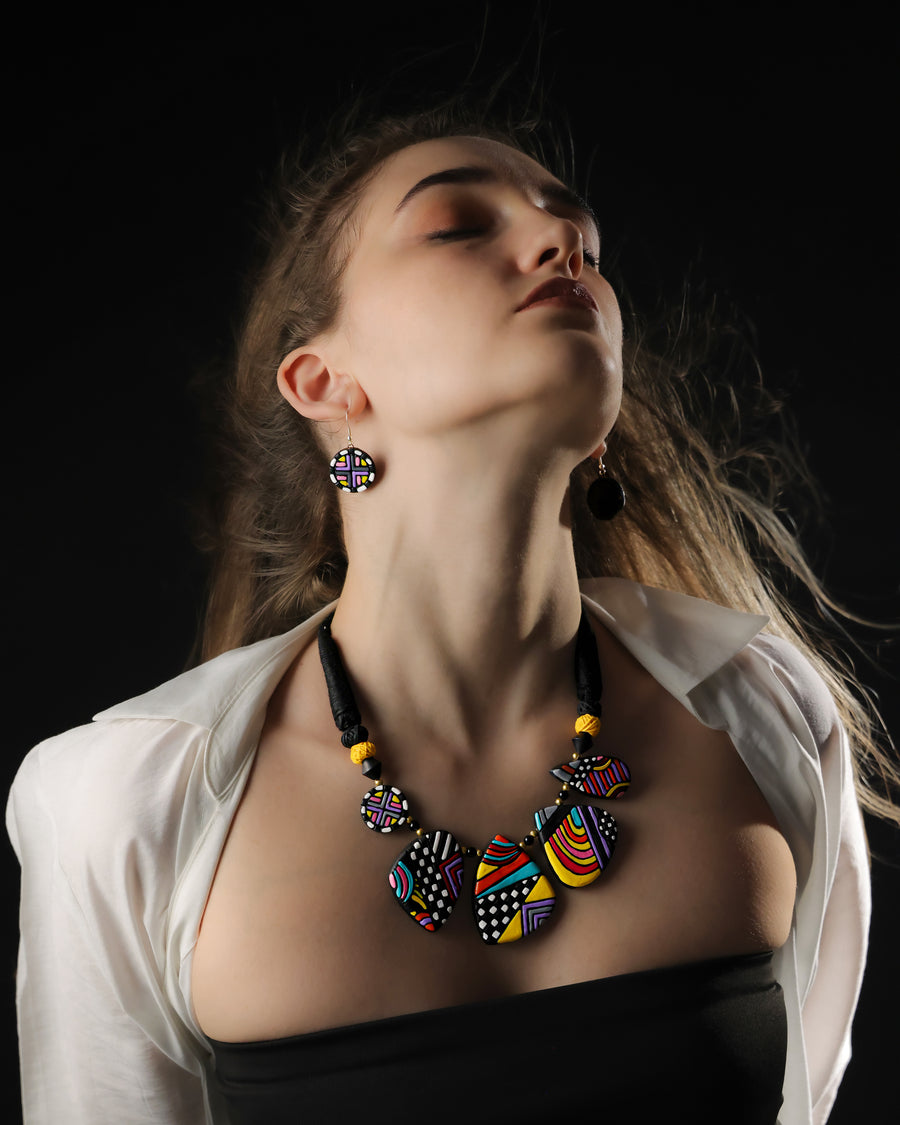
Terracotta is clay that has been shaped and baked. Cordelia Kraft pieces use river clay from the banks of the Ganges and Yamuna, hand-pressed and sculpted, then fired and painted. There’s no plastic or resin involved.
Compare that with a lot of cheap trend jewelry. When the plating wears off and your earlobes turn green, you toss it in the trash, and most of it can’t be recycled. A well-made clay piece has no metal plating to flake away, so with basic care it can stay in rotation for years.
Is handmade cordelia jewelry better for the environment?
Normally yes, as it's made in small batches and tends to have a longer lifespan, so there's less overproduction and therefore less unsold stock going to landfill.
Mass-produced jewelry is often made in huge runs to hit a trend, and whatever doesn’t sell gets discounted, dumped, or destroyed. Handmade pieces are made in quantities that match demand. Each one also takes time, which tends to make people value it more.
That last part matters more than it sounds. The most sustainable piece of jewelry is the one you keep wearing. If you love it, you won’t replace it next spring. If you want to see how much work goes into one design, our post on how a motif goes from sketch to clay jewelry walks through the process.
Who makes Cordelia Kraft terracotta jewelry?
Artisan partners at House of Kraft in Kolkata, India, shape, bake, and hand-paint Cordelia Kraft pieces. The brand’s studio in Illinois creates the designs.
Terracotta is one of India's oldest crafts. If you want to buy something that can genuinely be called sustainable fashion, buy from skilled artisans. It's fundamental to know who made your jewelry and how it was made.
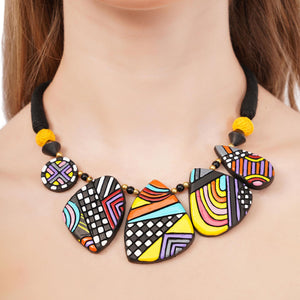
Because every motif is painted freehand, no two pieces are identical. Small differences in brushstroke and color are part of the craft, and a sign that a person made it.
Is clay jewelry good for everyday wear?
Yes. This is where it beats many eco options that look lovely but end up sitting in a drawer. Clay is light, so large earrings and pendants stay comfortable all day. Brass fittings hold up to normal wear. And earthy tones go with denim, linen, black, and most neutrals you already own.
Practical matters for sustainability. A piece you can wear to work, to the grocery store, and to dinner gets far more use than a fragile piece saved for special occasions. Browse the best-selling Cordelia jewelry to see which pieces customers reach for most often.
Clay does need a little care. It’s fired and sealed, so treat it like a small ceramic piece: avoid drops on hard floors and keep it dry.
How can you tell if a jewelry brand is truly sustainable?
Look for specifics rather than vague claims. A brand that tells you where its materials come from, who makes its products, and how it ships them is generally more credible than one that just throws out the word 'eco-friendly'.
Ask these questions before you buy:
1. Does the brand name its materials and where they come from?
2. Does it say who makes the pieces and where?
3. Are pieces made in small batches or mass stock?
4. Does it offer care instructions so products last longer?
5. Does it explain its shipping or packaging choices?
We name our clay source and its artisan partners, make pieces in small theme-led batches, and offset delivery emissions through Shopify Planet carbon removal projects. You can read the details on our impact page.
Be cautious with words like “green,” “conscious,” or “natural” when they appear with no explanation. Those words alone don’t tell you anything.
How can you build a sustainable jewelry collection?
Buy less, and buy pieces that work harder. A few habits make this easy:
1. Choose sets that you can split so that one purchase gives you both an earring and a necklace look.
2. Pick colors that work with your existing wardrobe rather than going in for some trendy color.
3. Before you buy, ask yourself if you'd still wear it in three years.
4. Set a simple rule: one new piece in, one unworn piece out.
A versatile set like the Boho Terracotta Clay Necklace & Earrings Set works with jeans on a Saturday and a simple dress on a weeknight, so fewer pieces do more of the work.
Start with three pieces: a pair of everyday earrings, a statement pendant, and one set you can split. That little collection will do you for the year.
Are mixed-material pieces sustainable too?
They can be (as long as the materials are natural and the piece is built to last). Clay with wood, beads, or shell adds texture and interest without resorting to plastic.
Mixed-material pieces are also versatile. A necklace that combines shell and clay looks relaxed with linen in summer and adds warmth to a knit in winter. The fusion collection brings these materials together, including the Shell, Bead & Clay Flower Pendant Necklace.
Does switching to sustainable accessories make a difference?
Yes. Small swaps add up and change what we consider to be normal. A single handmade item that you wear for years can effectively replace several cheap items which would otherwise end up in the bin.
Celebs have really brought this into the mainstream. At the May 2022 Met Gala, Billie Eilish wore a Gucci gown made from recycled fabric and told the press she "just wanted to be as eco-friendly as possible." The red carpet has continued in that direction since, with more stars opting to wear vintage, rewear, and choose handmade pieces.
You don’t need a red carpet to do the same thing. Choosing one handmade accessory over a disposable one is the everyday version of that choice. For a look at where this is all heading, see our round-up of clay and sustainable jewelry trends for 2027.
How do you care for clay jewelry so it lasts?
Keep clay jewelry dry, and take it off before swimming, showering, or working out. Store each piece separately so it doesn’t knock against metal jewelry, and wipe it with a soft, dry cloth when it gets dusty.
Put your jewelry on last when you get ready, after perfume, lotion, and hairspray have dried. Chemicals can dull painted finishes over time. The brand’s jewelry care guide has more detail on storage and cleaning.
With proper care, a clay pendant can be part of your wardrobe for a long time. Good care is half the battle in keeping any piece sustainable.
Is handmade jewelry worth the price?
Usually, yes, once you think about cost per wear. Here’s a simple comparison.
|
Option |
Price |
Times Worn |
Cost Per Wear |
|
Fast-fashion earrings that tarnish |
$15 |
4 |
$3.75 |
|
Handmade clay set worn weekly for 2 years |
$46.50 |
100 |
about $0.47 |
The handmade set costs more upfront, but is far cheaper to wear over time. With the craftsmanship, the story, and the fact that no one else has that exact piece, the value is clear. The Crimson Heart jewellery set is a lovely wearable place to begin.
What should I do with jewelry I no longer wear?
Pass it on instead of tossing it. Give it to a friend whose style it is, donate it to a charity shop, or sell it via a resale app.
Clay and handmade items generally find a second home easily because they're unique. Wearing jewelry (even if it's not your own) is one of the simplest sustainable things you can do.
You can also do a swap with friends. Each person brings along 2 or 3 pieces they've stopped wearing and everyone walks away with something new. It costs nothing, it clears your drawer and your pieces get worn again rather than just sitting in a drawer.
Frequently asked questions
Is terracotta jewelry eco-friendly?
Yes, terracotta is natural clay that is formed and fired. It contains no plastic or resin. When made in small batches and cared for properly, it's one of the more sustainable jewelry options.
Does terracotta jewelry break easily?
It’s sturdy enough for everyday wear but can chip or crack if dropped on a hard floor. Store pieces separately and handle them like small ceramics.
Can clay jewelry get wet?
Avoid it. Remove clay jewelry before swimming, showering, or exercising, since water, chlorine, and sweat can damage painted finishes over time.
Is handmade jewelry more ethical than mass-produced jewelry?
It can be, especially when the brand names its makers and explains how they work. Look for brands that share who makes their pieces and where, instead of relying on vague claims.
How long does clay jewelry last?
With basic care, clay jewelry can last for years. Keep it dry, store it separately, avoid chemicals, and wipe it with a soft cloth to keep it looking good.